
Finger clubbing is a change in the fingertips and nails, where the ends of the fingers become wider and the nails curve over. It can be a sign of lung cancer, including in people who have never smoked, but few people know about it and it is easy to miss. Here is what finger clubbing looks like, how to check your fingers with the diamond gap test, and when to see your GP.
What is finger clubbing?
Finger clubbing, sometimes called digital clubbing, happens when the tissue under and around the nails thickens. The fingertips can become rounder and wider, and the nails curve down over them, a bit like the back of an upside-down spoon.
It is usually painless, so many people don't notice it in themselves. It can affect the toes as well as the fingers.
What does finger clubbing look like?
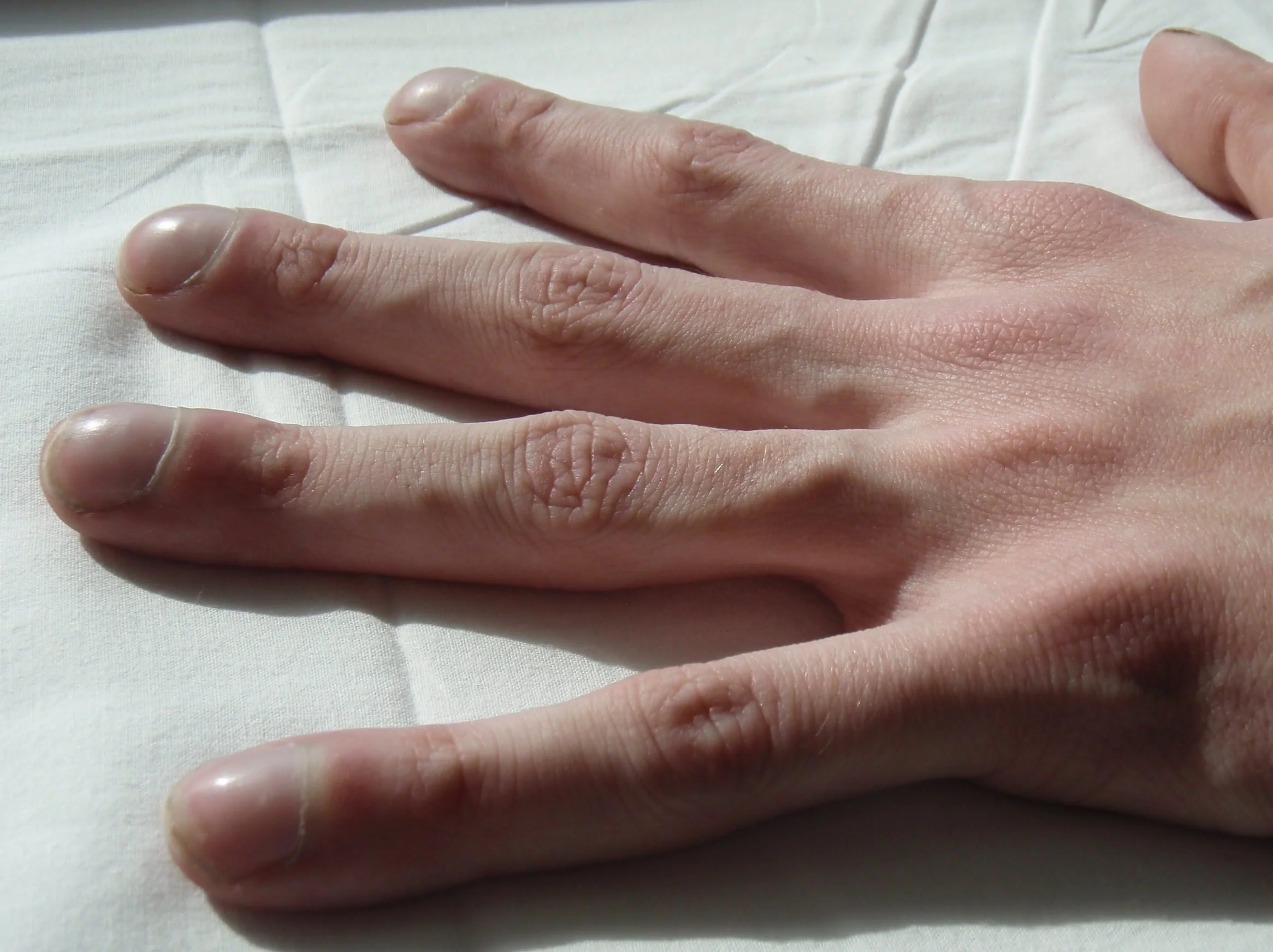
Finger clubbing tends to develop in stages. Signs include:
the nail bed feeling soft or spongy, so the nail seems to float rather than sit firmly
the skin around the nail becoming red
the angle between the nail and the cuticle disappearing, so the nail curves more than usual
the nail and surrounding skin looking shiny
the ends of the fingers becoming larger and rounded, sometimes described as a drumstick appearance
How to check for finger clubbing: the diamond gap test
A simple check, known as Schamroth's window test, can show whether the angle at the base of your nails has changed.
Put the nails of the same finger on each hand back to back, so the nails and the first knuckles touch. Index fingers work well.
Look at the space between the two nails, near the cuticles.
Usually you will see a small diamond of light between them.
If there is no gap, this could be a sign of finger clubbing.
The test is a check, not a diagnosis. If you notice no gap, or any change in your fingertips or nails, speak to your GP. Most people with clubbed fingers don't have lung cancer, but it is worth getting checked.
How common is finger clubbing in lung cancer?
Lung cancer is the most common cause of finger clubbing. In a US study of 111 people with lung cancer, 29% had finger clubbing. It was found in 35% of people with non-small cell lung cancer and 4% of people with small cell lung cancer.
The same study found clubbing in 40% of women compared with 19% of men. This was a small study at a single hospital, published in 1998, so the figures are a guide rather than a firm rate.
Lung cancer in people who have never smoked is usually non-small cell lung cancer, the type in which clubbing was most common in this study. Clubbing can also be the only sign, with no cough or breathlessness.
Why can lung cancer cause finger clubbing?
Doctors don't fully understand why clubbing happens. It is thought to involve increased blood flow and fluid building up in the soft tissue of the fingertips. Cancer Research UK explains that it may be linked to a protein called vascular endothelial growth factor (VEGF).
In some people, lung cancer also causes a rare condition called hypertrophic pulmonary osteoarthropathy (HPOA). This causes swelling, pain and stiffness in the bones and joints, mainly in the wrists and ankles, and it usually comes with finger clubbing. It is most often seen with non-small cell lung cancer and can be mistaken for arthritis. Treating the lung cancer can help with the symptoms.
What else can cause clubbed fingers?
Finger clubbing has other causes too, including:
long-term lung conditions such as bronchiectasis, cystic fibrosis and interstitial lung disease
some heart conditions, including heart defects present from birth and infection of the heart lining (endocarditis)
liver conditions such as cirrhosis
coeliac disease and other bowel conditions
an overactive thyroid
some other cancers
Clubbing can develop over weeks, and it may improve once the cause is treated. Some people have clubbed fingers all their lives and it runs in the family. What a doctor will want to know is whether it is new.
What should your GP do about finger clubbing?
Finger clubbing is part of UK guidance on when to check for lung cancer.
In England and Wales, NICE guidance says GPs should consider an urgent chest X-ray, done within 2 weeks, for people aged 40 and over who have finger clubbing.
In Scotland, the Scottish Referral Guidelines for Suspected Cancer say an urgent chest X-ray should be requested for people with new or not previously documented finger clubbing.
If you are under 40, you should still see your GP about any change in your fingers or nails. Lung cancer can affect people of any age, and it is not only linked to smoking.
A chest X-ray doesn't always show lung cancer, so if your symptoms don't go away, go back to your GP.
Symptoms of lung cancer to look out for
a cough that won’t go away
breathlessness
chest, shoulder or back pain
fatigue
a hoarse or croaky voice
unexplained weight loss
chest infections that keep coming back
coughing up blood
changes in your fingertips or nails, such as finger clubbing
If you have symptoms that don’t go away, speak to your GP, even if you have never smoked. Find out more in our article Lung cancer statistics in the UK: the key facts and figures.
Sources: Sridhar KS, Lobo CF, Altman RD. Digital clubbing and lung cancer. Chest, 1998. Study. National Institute for Health and Care Excellence, Suspected cancer: recognition and referral (NG12). Scottish Referral Guidelines for Suspected Cancer: lung and pleural cancers. Cancer Research UK, Hypertrophic pulmonary osteoarthropathy (HPOA). MedlinePlus, Clubbing of the fingers or toes. Roy Castle Lung Cancer Foundation, Simple test for lesser known lung cancer symptom.
All You Need Is Lungs is a joint campaign from ALK Positive UK, EGFR+ Lung Cancer UK and the Ruth Strauss Foundation.
