
Surgery is now an option for some people with advanced lung cancer, alongside targeted treatment. Natasha was diagnosed with stage 4 EGFR+ lung cancer in 2022 and told it was inoperable. Nearly four years later, she had part of her lung removed. Below, we share her story and look at what the research says about surgery and radiotherapy for advanced lung cancer.
Natasha’s lung cancer diagnosis
Natasha was diagnosed with EGFR+ lung cancer in 2022, after a cough that wouldn’t go away, a croaky voice and tiredness that never lifted. At first she was told she had tuberculosis. By the time lung cancer was diagnosed, it had spread to her brain, and she was told it was incurable and inoperable.
She loves the outdoors, her family and their two dogs, and yoga is what keeps her calm. For the past few years she has been on osimertinib, a targeted treatment for EGFR+ lung cancer that comes as a daily tablet.
A lobectomy with stage 4 lung cancer
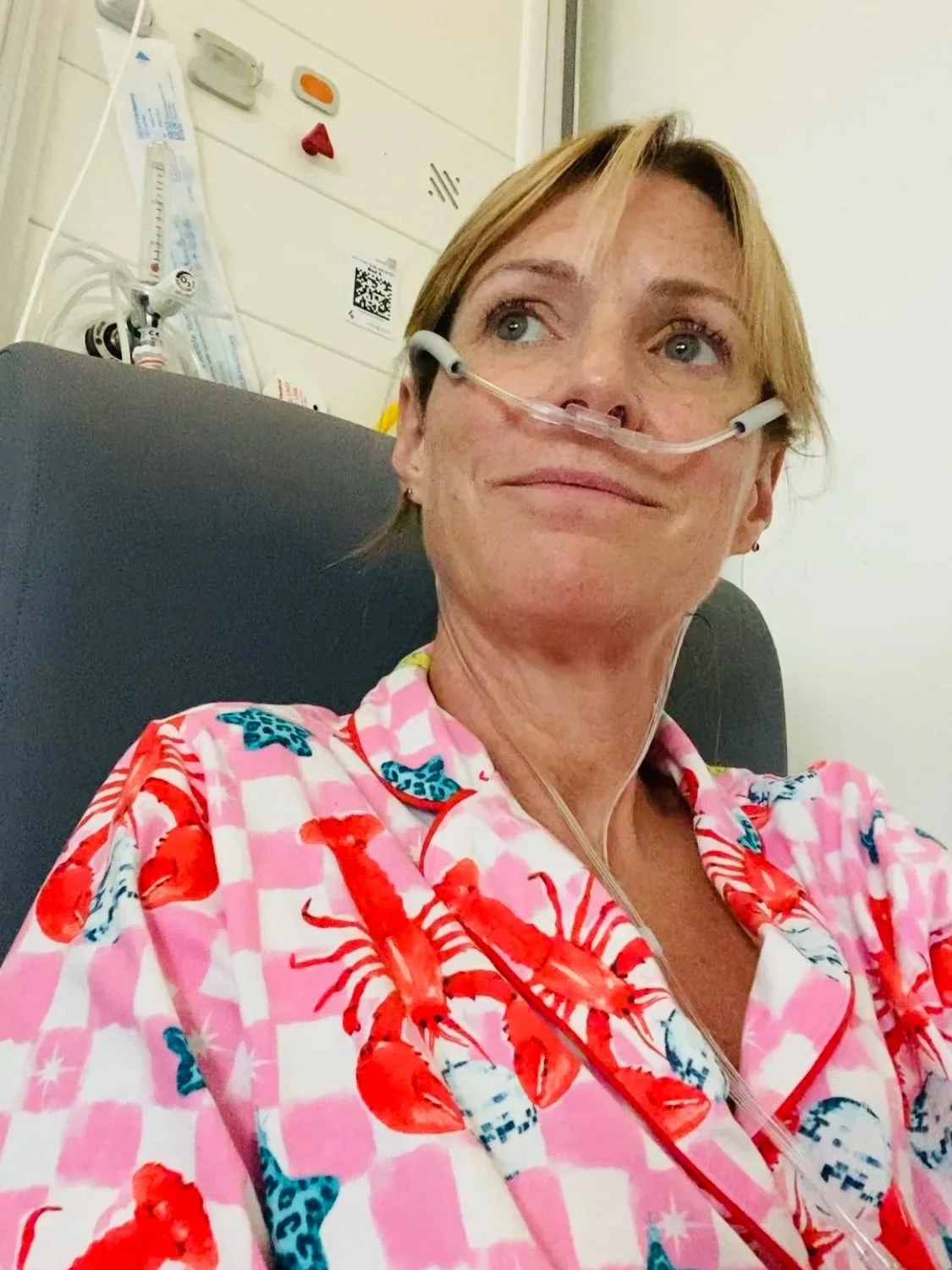
Nearly four years after her diagnosis, Natasha had a lobectomy, an operation to remove the top right lobe of her lung. She believes she is the first woman in the UK to have this surgery while on osimertinib after her cancer had spread to the brain.
It wasn’t simple. Osimertinib had left her lung tissue scarred and fragile, and her surgeons found her lung stuck to her ribs. During the operation, a nerve to her vocal cords was cut. Air leaked from her lung, it collapsed twice, and she had a chest drain for about a month. Tests after surgery showed some cancer cells were still there, so she then had 15 rounds of radiotherapy to her sternum.
She stopped osimertinib for a couple of months to let her body heal. During that time one of the tumours in her brain grew slightly, and it shrank again once she went back on treatment. Because of the tumours in her brain she can’t drive, so friends took turns getting her to appointments.
Even so, she says she would “jump at the chance to have this surgery again.”
Life after lung cancer surgery
A couple of months after the operation, Natasha was back doing yoga. She has since started yoga teacher training and wants to specialise in yoga for people living with cancer.
She wasn’t allowed to fly for six months because of the risk of pneumonitis, a type of lung inflammation. Since August she has been on three holidays abroad. She is now waiting for the results of her latest CT scan, and she says she continues to live with hope that more treatment options will become available.
Why surgery is being offered to more people with advanced lung cancer
For a long time, surgery was mostly kept for lung cancer found at an early stage. Once lung cancer had spread, treatment was usually a drug given through the whole body, such as chemotherapy, immunotherapy or a targeted treatment.
Targeted treatments like osimertinib have changed that for some people. They can shrink cancer a lot, and keep it under control for years. When the cancer has spread to only a few places, doctors are now asking a new question: if the drug has done its job, can surgery or radiotherapy treat what’s left?
This approach is called local consolidative therapy. “Local” means it treats specific tumours rather than the whole body, and “consolidative” means it is added on top of the drug to strengthen the response.
What the NorthStar trial found about surgery and radiotherapy with osimertinib
NorthStar is a phase 2 trial in 119 people with advanced EGFR+ lung cancer. Everyone took osimertinib for 6 to 12 weeks first. They were then split into two groups: one stayed on osimertinib alone, the other stayed on osimertinib and also had surgery or radiotherapy to the remaining tumours.
The results were presented at the European Society for Medical Oncology congress in October 2025:
People who had local treatment went a median of around 25 months before their cancer grew, compared with around 17 months on osimertinib alone. That is a gain of around eight months.
Most people in the local treatment group had radiotherapy, and around 4 in 10 had surgery, mostly a lobectomy like Natasha’s.
Serious side effects were more common with local treatment, at 29% compared with 16% on osimertinib alone. Rates of pneumonitis were in line with what doctors expect from radiotherapy to the chest.
It is too early to know whether it helps people live longer overall.
What we still don’t know about surgery for advanced lung cancer
Not every trial has shown a benefit. NRG-LU002, a US trial in people with lung cancer that had spread to a limited number of places, found no improvement from adding local treatment. Most people in that trial were having immunotherapy rather than targeted treatment, so it isn’t a direct comparison. It does show that local treatment won’t suit everyone.
Specialists stress choosing the right person at the right time. Usually that means someone whose cancer has responded well to treatment, after a full assessment by a team that includes a thoracic surgeon. Surgery after osimertinib can also be harder than usual, because the drug can cause scarring and inflammation in the lung, as Natasha found.
Researchers are still working out which people benefit most, whether surgery or radiotherapy is better, and whether this approach helps people live longer.
Questions to ask your healthcare team about surgery
If you are living with advanced lung cancer and your cancer has responded well to treatment, you can ask your healthcare team:
Has my case been discussed by a team that includes a thoracic surgeon?
Could surgery or radiotherapy be an option for me, now or in the future?
Are there clinical trials I could join?
Know the symptoms of lung cancer
Natasha’s first symptoms were a cough, a croaky voice and tiredness. If you’ve got lungs, you can get lung cancer. Look out for:
a cough that won’t go away
breathlessness
fatigue
a hoarse or croaky voice
chest, shoulder or back pain
unexplained weight loss
chest infections that keep coming back
coughing up blood
If you have symptoms that don’t go away, speak to your GP, even if you have never smoked. Find out more in our article Lung cancer early diagnosis saves lives: the facts.
Thank you to Natasha for sharing her story with All You Need Is Lungs again this year. Read Natasha’s full 2026 story.
Sources: NorthStar trial (Elamin YY et al), presented at ESMO Congress 2025, abstract LBA72, reported by The ASCO Post and CancerNetwork, October 2025. NRG-LU002 (Iyengar P et al), presented at ASCO Annual Meeting 2024.
