

Why do people who have never smoked get lung cancer? What new research tells us
Why does lung cancer develop in people who have never smoked? It's a question researchers are still working to answer.
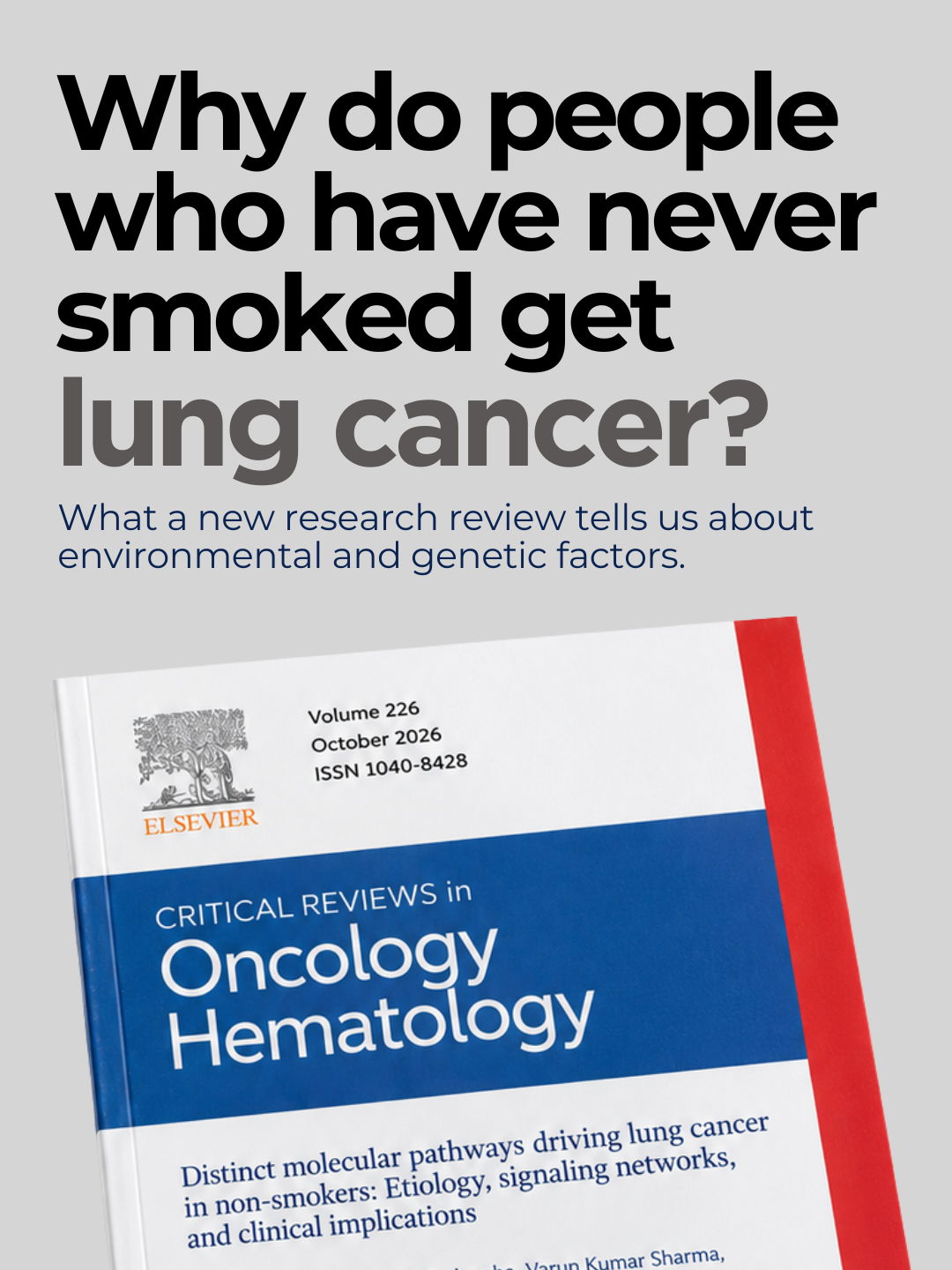
A new scientific review published in October 2026 brings together research on the environmental and genetic factors that may contribute to lung cancer in people who have never smoked.
The review, published in Critical Reviews in Oncology/Hematology, also looks at how a better understanding of these factors could improve diagnosis and treatment.
What causes lung cancer in people who have never smoked?
Smoking is a major risk factor for lung cancer, but it is not the only one. Anyone can develop the disease, regardless of their smoking history.
The review highlights several factors associated with lung cancer in people who have never smoked, including:
Air pollution, particularly exposure to harmful particles in the air.
Radon, a naturally occurring radioactive gas that can build up inside buildings.
Workplace exposures, including certain substances known to increase cancer risk.
Genetic changes that can cause lung cells to grow and multiply uncontrollably.
Researchers are still working to understand how these factors interact and why some people develop lung cancer while others do not.
Why are EGFR and ALK genetic changes important?
The review also examines genetic changes linked to lung cancer, including EGFR, ALK, ROS1, RET and HER2.
These changes are found more frequently in certain types of lung cancer affecting people who have never smoked.
Identifying these changes through molecular testing can help doctors understand the cancer and determine whether targeted treatments may be suitable.
Most of these changes develop in the cancer cells during a person's lifetime and are not inherited from their parents.
What could this mean for earlier diagnosis and treatment?
The researchers highlight the need for better ways to identify lung cancer risk in people who have never smoked, alongside further research into the biology of the disease.
Understanding the role of environmental exposures and genetic changes could help improve prevention, earlier diagnosis and the development of new treatments.
There is still much we don't know, and it isn't always possible to identify why an individual develops lung cancer.
But one thing is clear: lung cancer must be considered regardless of someone's smoking history.
Read the research
Published in Critical Reviews in Oncology/Hematology, October 2026.
